

Winter 2025 Newsletter
A.P. Giannini Alumni Earn Prestigious HHMI Hrabowski Scholars Awards
Howard Hughes Medical Institute (HHMI) seeks to develop future leaders and build inclusive learning environments. The Freeman Hrabowski Scholars program supports outstanding basic researchers “who have strong potential to become leaders in their fields.” The prestigious program awards scholars to a five-year term with an opportunity to renew for another five years. Scholars receive generous support that includes a full salary and benefits, a research budget, and scientific equipment.
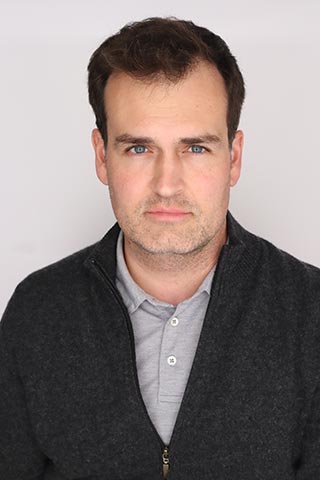
Two of the 2025 Freeman Hrabowski Scholars are former fellows. 2018 Fellow Timothy A. Machado, Ph.D., is Presidential Assistant Professor in the department of neuroscience at the University of Pennsylvania. Tim’s lab studies the flexible way in which the brain works by using different parts of the brain to generate behavior. By using large‑scale neural recording techniques to monitor activity across the mouse motor system as animals move in varied behavioral contexts, Tim seeks to understand how the brain generates context-specific motor commands and functions as a unified whole to control behavior. His work could ultimately inform treatment for patients when a part of the brain is compromised.
“My lab and I are honored to receive support from HHMI as a Freeman Hrabowski scholar. While most grants support individual projects, HHMI supports entire labs. This gives us the creative freedom to work on ambitious ideas that we think will change how we currently understand the brain to generate behavior. We’re also committed to building and maintaining a supportive lab environment where everyone can share their unique expertise and talents and learn from each other,” Tim said.
In addition to the HHMI Award, Tim recently won the Beckman Young Investigator Award and the Brain and Behavior Research Foundation Young Investigator Award.
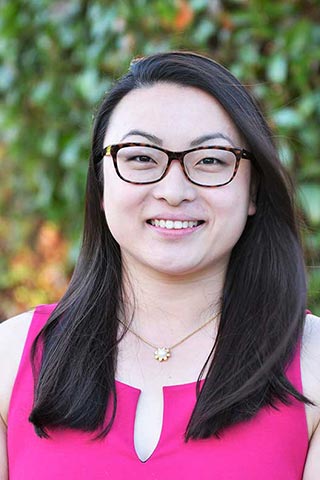
2017 Fellow Elisa T. Zhang, Ph.D., who was featured in the foundation’s Spring 2025 newsletter, is an assistant professor in the departments of physiology and membrane biology and obstetrics and gynecology at the University of California, Davis. Her lab studies the uterus’ capacity for scarless regeneration during the menstrual cycle as well as tissue remodeling during pregnancy. Elisa’s research seeks to uncover new insights into uterine disorders and tissue repair.
“The HHMI Freeman Hrabowski Award recognizes excellence in both research and in inclusive mentorship. By providing generous, stable funding for 10 years, the Freeman Hrabowski Award is enabling my lab to pursue bold, new directions in uterine and pregnancy research,” Elisa said.
Former Fellow Leads Neurobiology Department at UCLA

The A.P. Giannini Foundation congratulates 2007 Fellow Genevieve Konopka, Ph.D., who assumed the role of Chair of the Department of Neurobiology in the David Geffen School of Medicine at UCLA on July 1, 2025. Prior to her recent appointment at UCLA, Genevieve was Professor and Vice Chair of Neuroscience, the Jon Heighten Scholar in Autism Research, and the Townsend Distinguished Chair in Research on Autism Spectrum Disorders at UT Southwestern Medical Center.
One focus of Genevieve’s autism research is trying to understand the molecular mechanisms of autism. To this end, the Konopka Lab studies single genes that are considered high risk for autism, and in particular, FOXP1, which is expressed early in the brain during fetal development. Individuals that have genetic variants in FOXP1 are almost guaranteed to develop a severe form of autism called FOXP1 syndrome. Using mouse models and human stem cells, Genevieve seeks to understand what the role of FOXP1 is in the brain.
Genevieve’s research touches upon other cognitive disorders as well. As one example, the Konopka Lab is studying the trajectories of oligodendrocytes, a type of non-neuronal cells in the central nervous system, over the course of human development, into adulthood and across species, to understand the role this cell type plays in disorders of cognition and aging like Alzheimer’s Disease. Across projects, Genevieve and her lab use a combination of human neurons, animal models, and primate comparative genomics to uncover human-specific, disease-relevant patterns of gene expression.
As she reflects on her A.P. Giannini postdoctoral fellowship, which she conducted in Daniel Geschwind’s Lab at UCLA, Genevieve remarked how much she gained from the interview process. “It was a wonderful experience to be asked questions by [the Scientific Advisory Committee] before I had all of my data; they helped me consider what I should be thinking about as I was embarking on my project,” she said. Genevieve’s successful postdoctoral research project on FOXP2, a gene that plays a critical role in the development of speech and language, ultimately resulted in an article published in Nature in 2009.
To learn more about Genevieve’s research, visit her lab’s website.
2023 Fellow Launches Lab Studying Pediatric Cancers
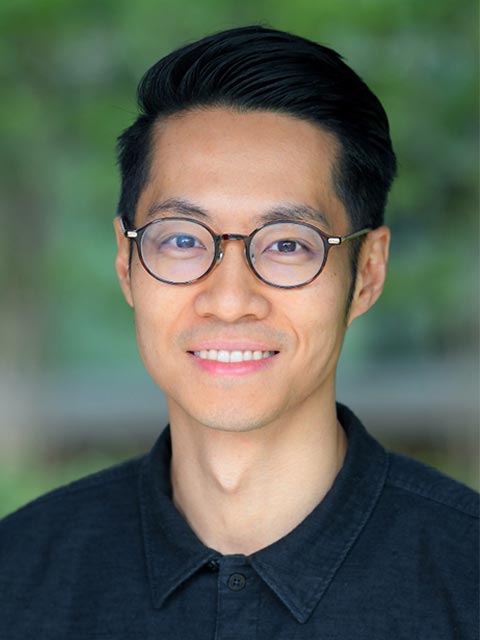
2023 Fellow Christopher Kuo, M.D.
2023 Fellow Christopher Kuo, M.D., Attending Physician and Assistant Professor of Clinical Pediatrics at the Keck School of Medicine at USC, started his own lab at Children’s Hospital Los Angeles/USC on July 1, 2025. Chris researches Ewing sarcoma, an aggressive bone and soft tissue cancer that afflicts adolescents and young adults. Specifically, the Kuo Lab investigates the tumor microenvironment of Ewing sarcoma, with a particular focus on macrophage-cancer cell cross talk, and intends to expand this work to osteosarcoma in the near future.
Chris conducted his postdoctoral research under the mentorship of James F. Amatruda, M.D., Ph.D., Chief of the Division of Pediatric Hematology-Oncology, Director of the Cancer and Blood Disease Institute, and the Afred E. Mann Foundation Chair in Cancer Research at Children’s Hospital Los Angeles. He is also tenured Professor of Pediatrics and Medicine at the Keck School of Medicine at USC. Chris’ research has focused on the “cross talk” between cancer cells and macrophages, a specific type of immune cells, to understand how cancer cells avoid detection by immune cells. In an article based on his postdoctoral research that was recently published in Clinical Cancer Research, Chris describes the potential role that a molecule secreted by cancer cells, Macrophage Migration Inhibitory Factor, or MIF, is playing in transforming the surrounding macrophages, allowing cancer cells to avoid detection by immune cells. Chris’ research has the potential to inform the development of new therapies such as MIF inhibitors.
As a physician-scientist, Chris dedicates 80% of his time to research and 20% of his time to seeing patients. Chris enjoys his clinical hours not only because he enjoys working with patients, but as he explains, “Time in clinic is time for me to re-engage with my purpose of what I’m doing in the lab; it’s for these patients.”
As Chris builds out his lab, he will be embarking on research projects related to osteosarcoma, which is a more common form of bone cancer. The microenvironments in the two pediatric cancers are similar; and in both cases, immune cells are unable to kill cancer cells, and existing therapies have been unsuccessful in penetrating the cancer cells. “The gestalt of what’s going on in these two cancers is pretty much the same even if the mechanism is different, so I can apply similar techniques to osteosarcoma,” he said.
To learn more about Chris’ research, click here.